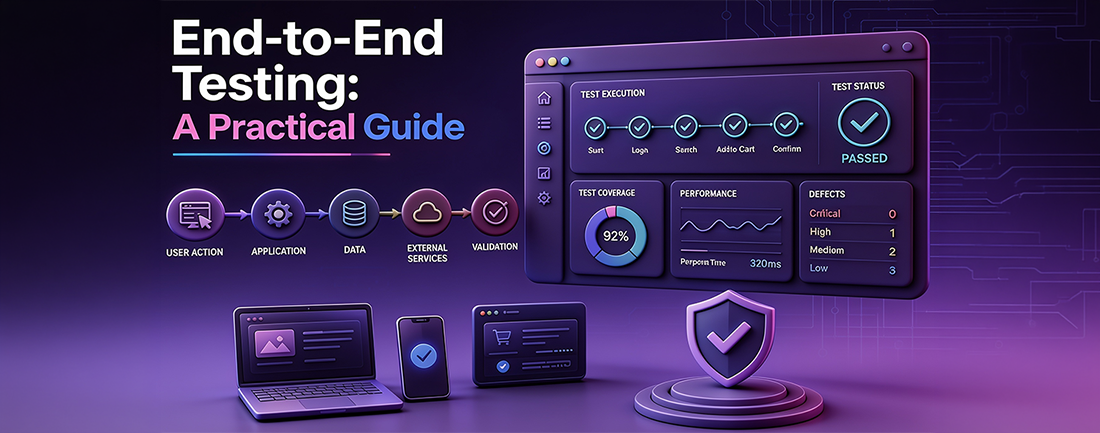
In modern software development, creating robust end-to-end (E2E) test cases is essential for ensuring that critical application workflows function as expected. This guide explains how to design effective E2E test cases, organize them into test suites, determine the appropriate execution stage, and identify the roles involved in maintaining a reliable testing process.
Crafting E2E Test Cases:
Identify Business-Critical User Journeys: Start by identifying the most important user journeys within your application, focusing on workflows that have the greatest impact on user experience and business objectives.
Define Clear Test Scenarios
Break down these critical user paths into distinct test scenarios, each representing a unique interaction or functionality. For example, a login scenario may include successful logins, failed attempts, and password recovery.
Consider Edge Cases:
Include edge cases in your test scenarios, accounting for less common conditions or inputs that may lead to unexpected behaviours. Consider boundary values, invalid inputs, empty fields, permission-based scenarios, and network interruptions.
Ensure Test Independence:
Keep each test case independent to streamline debugging and isolate issues to specific functionalities.
Assembling Test Suites:
Organize Test Cases by Feature or Business Functionality: Group test cases into suites based on the functionalities they assess, such as authentication, payment processing, or content delivery. This simplifies test management and maintenance.
Prioritize Based on Impact:
Prioritize test suites according to the criticality of functionalities, ensuring high-priority tests are executed first for swift feedback on essential features.
Optimal Execution Timing:
Post-Integration Testing: Execute E2E test cases after integration testing, assessing components together to identify issues arising from their interactions.
Pre-Deployment Checks:
Run E2E tests before deploying new features or updates to verify integrated changes function seamlessly in the entire application environment.
Responsible Stakeholders:
QA Teams: Depend on QA teams to execute E2E tests, leveraging their expertise in identifying and resolving issues affecting the user experience. Continuous Integration Pipelines: Integrate E2E tests into CI pipelines to automate testing during the continuous integration process, providing quick feedback on code changes.
Creating effective E2E test cases involves a systematic approach to covering critical user paths and edge cases. Organizing these cases into prioritized test suites and executing them post-integration ensures robust application performance. QA teams and CI pipelines play pivotal roles in executing and automating E2E tests, contributing to the overall reliability of the software.