
Introduction to QA Automation
QA Automation is crucial in today's software development landscape. Automation testing plays a crucial role in enhancing testing efficiency, accuracy, and speed by automating repetitive and time-consuming manual testing tasks. A significant portion of the QA automation effort is dedicated to preparing test scripts, with the actual execution accounting for less than 15% of the overall effort. For QA automation to be effective, test scripts must be robust, maintainable, and adaptable to user requirements and environments. To achieve optimal outcomes in automated testing or when utilizing automated testing frameworks, it's important to follow a structured approach for developing test scripts.
Current Industrial Trends in QA Automation
Several trends are influencing how organizations approach script development in the ever-changing world of QA automation:
- Scriptless Automation: Optimizing the automation process through the elimination of conventional scripting languages.
- AI-Assisted Test Scripting: Using Machine Learning and Artificial Intelligence algorithms to speed up and improve the quality of test script generation.
- Parallel Test Execution: Improving testing processes by executing numerous tests in parallel (concurrent execution) across various setups, devices, and environments.
- Headless Browser Testing: Performing testing in a web browser without a GUI to check the functionality of a web app and mimic user interactions.
- Keyword-Driven Testing: Generating test scripts with predefined keywords or action phrases; creating reusable modules; separating test logic from implementation details.
- Cross-Browser Test Automation Tools: Making use of dedicated frameworks and tools to automate testing on various platforms, browser versions, and different versions of the devices.
Challenges and Pain Points in Test Script Development
Over the past decade, QA automation script development has become much easier with rapid changes in technology and offers many advantages. However, there are still challenges that can make it difficult to write test scripts that are easy to understand and reuse:
Unclear Requirements:
When requirements are not clear or are missing key details, it becomes more difficult to create effective test scripts.
Application Instability:
Updates to test scripts may be necessary if the application's functionality, user interface, or underlying architecture is subject to rapid changes.
Dynamic Test Data:
Ensuring consistency, accuracy, and relevancy across test cases can be quite challenging when it comes to managing test data, particularly in dynamic or data-driven testing scenarios.
Dependency on External Systems:
Because of the added complexity and dependency synchronization required, integrating automated tests with external systems is not a simple task.
Script Maintenance:
Maintaining current test scripts in complex and large-scale projects can be an overwhelming task, particularly when scripts become obsolete or do not adjust to changes in testing needs or application specifications.
Collaboration and Reusability:
A lack of collaboration can hinder sharing and reusing test scripts across teams, projects and standardized practices.
FireFlink: A Solution for Robust Test Script Development
To overcome these obstacles and enhance the QA automation process, organizations can take advantage of FireFlink, a comprehensive “Extreme Automation” platform that simplifies the creation and execution of test scripts.
Let's explore how FireFlink's innovative features revolutionize test automation:
1. Test Data Management
Effective and efficient management of test data is made possible with FireFlink. FireFlink recognizes the importance of data-driven testing and includes a dedicated section for test data. The Test Data section provides a structured environment for test engineers to store and manage different types of data, facilitating their ease of integration into scripts. The testing process is ultimately improved by this centralized approach, which also improves script readability and maintainability.
2. Optimization through Step Group Concept
FireFlink utilizes a feature known as step groups. Step groups consolidate multiple test steps into a single reusable unit. Without step groups, rewriting constant test steps across various test cases would lead to duplicate effort and logic. Using step groups provides efficiency and simplicity in test scripts; making it highly beneficial. Joining related steps into a single test step that executes each sub-script component in its entirety, step groups make test case creation, maintenance, and execution more efficient.
FireFlink’s step groups makes automation easier, resulting in more efficient test scripts and increased productivity for test engineers.
3. Data-Driven Approach
FireFlink uses a data-driven approach, enabling effortless updates through the modification of data files through the Test Data section. Data is automatically updated in the associated test scripts, removing the need for manual intervention and ensuring that all test cases remain consistent. The flexibility of this approach enables test engineers to easily adjust to changing testing requirements and application updates without the need to update scripts manually.
4. Advanced Techniques for Handling Application Changes
Smart Waits, Dynamic XPaths, and CSS Selectorss are some of the innovative approaches that FireFlink uses to overcome application update challenges. Ensuring consistent test execution even in dynamic environments, these intelligent features enhance script robustness and reliability.
5. Parallel Execution for Improved Efficiency
FireFlink implements parallel execution methods to effectively address the challenges of running tests simultaneously while maintaining data isolation. This strategy improves the management of test scripts and ensures the isolation of data; resulting in a more effective use of testing resources and faster testing procedures.
6. Streamlined Regression Testing with FireFlink Scheduler
Executions of test suites can be scheduled directly within FireFlink. Debugging code all day and running test suites at night are common practices. Previously, test engineers had to deal with the inconvenience of closely monitoring the execution and manually re-triggering test suites when failures occurred.
FireFlink enables the convenient scheduling of test suites for execution at any time. This feature is particularly useful for running regression test suites that have a large number of test cases and require multiple cycles for thorough testing. For external scheduling, FireFlink also supports plug-and-play integration with other popular scheduling tools, such as Jenkins. FireFlink enables the execution of scripts in headless mode, allowing test engineers to focus on other tasks while the execution is in progress.
7. Simplified Debugging Process
Debugging becomes significantly easier with FireFlink's user-friendly features. FireFlink pinpoints the exact error or failure alongside the test step. Additionally, FireFlink offers comprehensive test reports with rich graphics and test analytics. By quickly analyzing failed steps, identifying their root causes, and implementing fixes, test engineers can reduce downtime and fix defects faster. This streamlined debugging process enhances overall testing efficiency and accelerates the software development lifecycle. The Automark feature in FireFlink helps reduce overall debugging effort, allowing specific defects in the application or even in scripts across test suites to be tagged.
Understanding Test Scripts: Traditional vs. FireFlink Platform
Before diving into the differences between traditional automation tools and the FireFlink platform, let's first understand the significance of test scripts in the realm of software testing. Test scripts serve as a set of instructions that outline the steps to be executed during automated testing. They play a crucial role in ensuring the reliability and accuracy of software applications by simulating user interactions, validating functionality, and detecting defects. Now, let's explore how the traditional approach to test script development compares to the innovative features offered by the FireFlink platform.
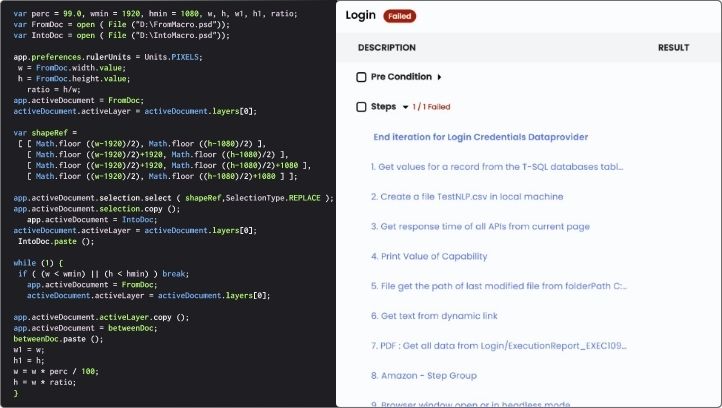
Traditional Automation Specifications:
- Coding Expertise Required
- Script Development is Time-consuming
- Manual Element Capture
- Debugging is Complicated – involves revisiting every line of code
- Screenshots and Video Configuration Requires additional tool configuration
- Result Analysis Basic result reports with pass or fail count of test cases
- Defect Tracking Management Requires additional tool configuration
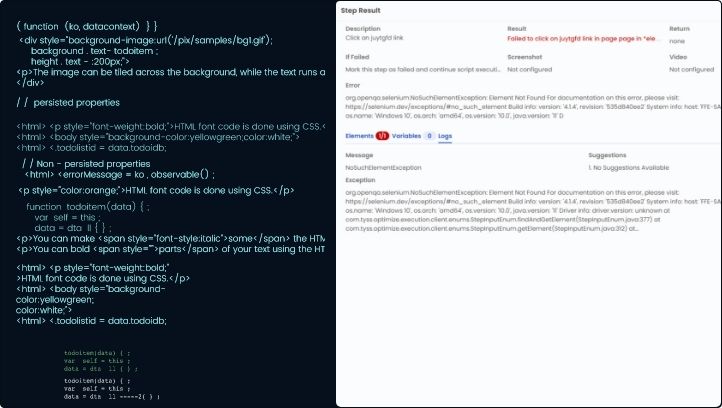
FireFlink Platform
- No Coding Expertise Required
- Script Development is Efficient and time-saving
- Utilizes FireFlink finder for optimal locator capture
- De-bugging using Auto Mark feature
- Screenshots and Video Configuration are Configured within the platform
- Offers graphical representation for result analysis, shows failed steps with exact error
- Includes integrated defect tracking management section for bug tracking
A Real Case Example
Let's look at a real case example in the education domain, where a company encountered several challenges with traditional test automation approaches.
Challenges with Conventional Test Automation:
Finding UI Elements:
Despite having ample resources, locating UI elements was difficult, causing inefficiencies.
Time Consumption:
The application size required a lot of time for automation, leading to delays.
Framework Complexity:
Understanding and working on the framework posed significant challenges for the testing team.
FireFlink's Customized Solution:
Unified UI Element Plugin: FireFlink introduced a unified plugin to capture UI elements systematically, making it easier to reuse.
Default NLPs for Faster Testing:
Using default NLPs increased test efficiency, cutting down overall testing time.
Methodical Web Script Management:
FireFlink's approach to managing web scripts, combined with predefined NLPs, made script automation for web platforms easier, faster and more simple.
Transformation in Testing Procedures:
Clear, Reusable Test Scripts: FireFlink made it easier to create clear, reusable test scripts, improving the effectiveness of testing.
Streamlined Maintenance:
Maintaining and reusing scripts became simpler, thanks to FireFlink's intuitive features, such as step groups and data-driven approach.
Cross-Platform Automation:
FireFlink was extremely effective for automating tests across varying platforms such as web, Android, iOS, API, and Database.
Enhanced Quality and Effectiveness:
Adopting Best Practices: Following FireFlink's Automation Center of Excellence (ACOE) best practices improved testing quality, effectiveness, and coverage.
Robust Testing Framework:
Implementing FireFlink's solution established a stronger software testing framework, ensuring better software quality and reliability.
FireFlink is an Extreme Automation solution that addresses the difficulties faced in QA, making the development and execution of test scripts more efficient. With the use of NLP scripting, unified testing, and advanced debugging mechanisms, FireFlink greatly improves the efficiency and effectiveness of automated testing procedures. Its user-friendly features and strong architecture make it easy to create reusable test scripts that are both transparent and easy to understand. By perfecting testing procedures and raising software quality assurance benchmarks, FireFlink ensures shorter development cycles, lower costs, and happier application users.