
What is Unit Testing?
Unit Testing is a fundamental software testing technique that focuses on individual units or components of a software system. Each unit, which can be a function, method, or procedure, is tested in isolation to validate that it works as intended and meets the specified requirements. Let’s dive into the details:
Why is Unit Testing Important?
Unit testing plays a crucial role in the software development process, offering several benefits that contribute to the overall quality and efficiency of code development. Here are some key reasons highlighting the importance of unit testing:
Catches bugs early: Unit testing helps identify issues at an early stage of development before the code is integrated into the larger system. By detecting bugs sooner, developers can address bugs promptly, saving time and resources that would otherwise be spent on debugging and fixing issues later in the development cycle. Catching bugs early in the process significantly reduces the cost impact of the bug. Improves code quality: Unit testing encourages developers to write modular, well-structured code that is easier to maintain and understand. By breaking the code into smaller units and testing each unit individually, unit testing promotes code clarity and maintainability, leading to higher overall code quality. Increases confidence: Unit tests provide a safety net for developers when making changes to the codebase. By having a comprehensive suite of unit tests in place, developers can refactor code or implement new features with confidence, knowing that any regressions or unintended side effects will be quickly identified by the tests. Faster development: Unit testing automates the testing process, allowing developers to quickly run tests and receive feedback on the correctness of their code. This rapid feedback loop enables developers to iterate more quickly, making incremental changes and improvements to the codebase with each iteration, ultimately speeding up the development process.
Unit testing is a critical practice in software development that offers numerous benefits, including early bug detection, improved code quality, increased developer confidence, and faster development cycles.
Purpose of Software Unit Testing:
Unit testing serves several essential purposes in the software development lifecycle, contributing to the overall quality and efficiency of the codebase. Here are the primary objectives of unit testing:
Validation: Unit testing verifies that each unit of code functions as expected and produces the correct output. By testing individual components in isolation, unit tests ensure that the code behaves correctly according to its design specifications. Early Detection of Issues: Unit testing helps identify bugs and defects early in the development process. By catching issues at the unit level and before integration, unit tests reduce the overall cost of fixing defects and prevent them from propagating to higher levels of the application. Developer Understanding: Writing unit tests requires developers to thoroughly understand the codebase and its intended functionality. Unit testing encourages developers to write modular, well-structured code that is easier to understand and maintain. Additionally, running unit tests provides developers with immediate feedback on the correctness of their code, helping them identify and address issues more quickly. Code Reusability: Well-tested units of code can be reused across different parts of the application, promoting code reusability and reducing redundancy. By ensuring that tested units perform reliably in various contexts, unit testing enables developers to leverage existing code assets efficiently and accelerate development timelines.
By incorporating unit testing into their development practices, teams can improve the reliability, maintainability, and efficiency of their software products.
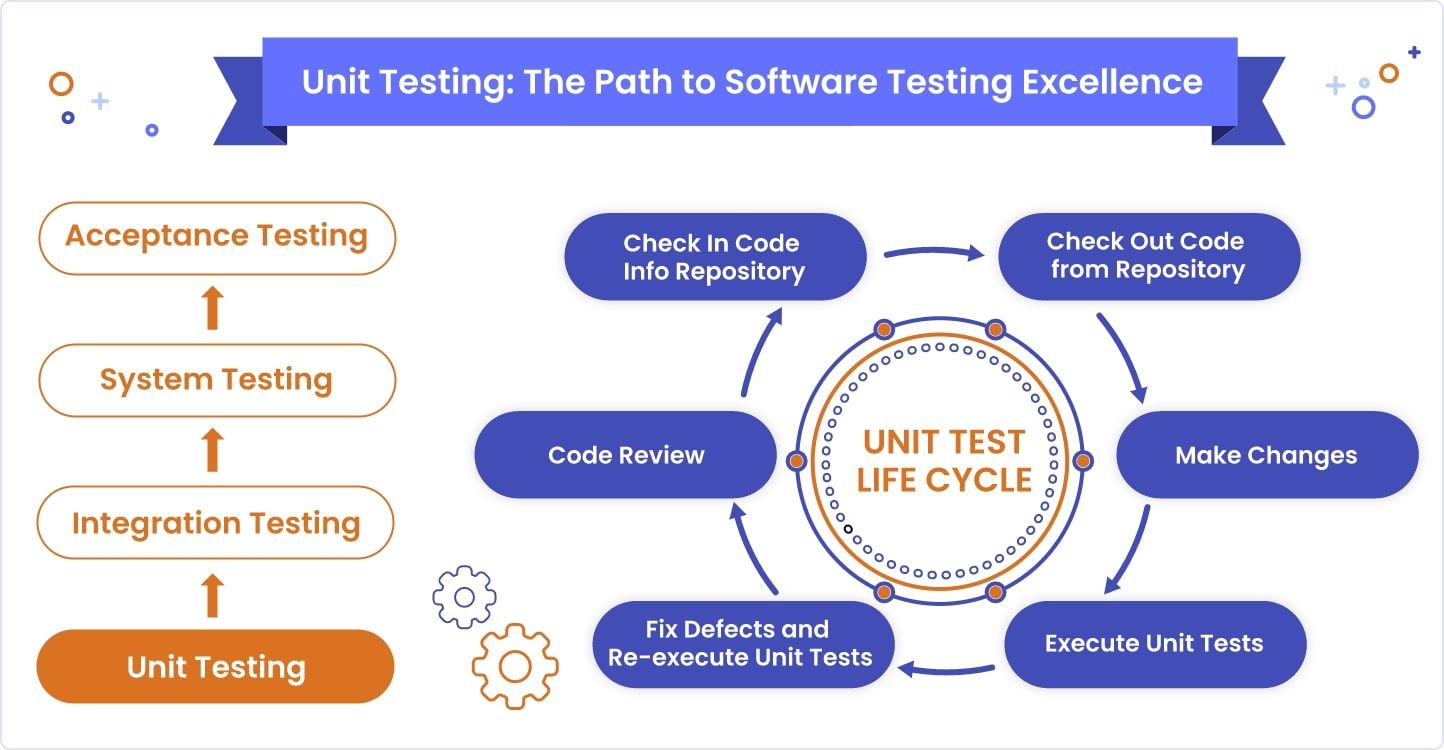
Workflow of Unit Testing:
Unit testing follows a structured workflow designed to verify the functionality and correctness of individual units of code. Here's an overview of the typical unit testing workflow:
Writing Unit Tests:
Developers write unit tests for specific functions or methods within the codebase. These tests are typically written using testing frameworks such as JUnit, NUnit, or pytest. Each unit test is designed to verify the behavior of a single unit of code in isolation, often targeting a specific functionality or edge case.
Automation:
Unit tests are automated to ensure they can be executed reliably and efficiently. Continuous integration (CI) practices are often employed to automatically run unit tests whenever changes are made to the codebase. This ensures that new code additions or modifications do not introduce regressions or unexpected behavior.
Execution:
Unit tests are executed regularly as part of the development workflow, typically triggered by events such as code commits or pull requests. Developers can also run unit tests locally on their development environments to verify changes before pushing them to the main code repository.
Verification of Correctness:
The primary goal of unit testing is to verify the correctness of each unit of code in isolation. Unit tests validate that individual functions or methods produce the expected output for a given set of inputs, according to the specified requirements or behavior.
Feedback Loop:
Unit testing provides immediate feedback to developers about the correctness of their code changes.
Failed unit tests indicate potential issues or regressions in the code, prompting developers to investigate and address them promptly.
By following this structured workflow, developers can improve the reliability and maintainability of their codebase through thorough unit testing practices. This iterative process of writing, automating, executing, and verifying unit tests forms an essential part of modern software development methodologies, such as test-driven development (TDD) or behavior-driven development (BDD).
Types of Unit Testing:
White box : Tests internal code structure and logic Black box : Tests functionality from an external user perspective Grey Box : Combines relevant test cases and analyses module performance Positive : Tests with valid inputs and expected behavior Negative : Tests with invalid inputs and error handling Edge case : Tests with unusual or boundary inputs
Tools Used for Unit Testing:
JUnit (Java): Popular framework with rich features PHP Unit (PHP): Simple and flexible for PHP projects pytest (Python): Concise and versatile for Python testing NUnit (C#): Open source framework often used with Visual Studio Google Test: Cross platform framework supported by Google
How to Write Unit Tests:
Unit testing is a critical aspect of software development, and adhering to best practices ensures the effectiveness and reliability of unit tests. Here are some key best practices for writing unit tests:
Write tests before code:
- Design tests before writing the actual code to guide development and ensure testability. This approach, known as test-driven development (TDD), helps in creating focused and well-defined code. Keep tests small and focused:
- Write tests that target a single unit of code with clear logic. Keeping tests focused on specific functionality enhances readability and maintainability. Automate tests:
- Automate the execution of tests to run automatically with every code change. Continuous integration (CI) practices ensure that tests provide immediate feedback, enabling developers to catch issues early. Mock dependencies:
- Isolate units under test from external dependencies by using mocks or stubs. Mocking dependencies ensures that tests are reliable and do not rely on external factors such as databases or network calls. Use meaningful names:
- Choose descriptive and meaningful names for tests that indicate what each test is verifying. This improves readability and understanding of the test suite. Strive for high test coverage:
- Aim to test a significant portion of the codebase to ensure comprehensive coverage. While achieving 100% test coverage may not always be feasible, strive to cover critical and complex code paths. Refactor tests as needed:
- Keep tests up-to-date with code changes and refactor them as necessary. As the codebase evolves, update tests to reflect changes in functionality or requirements, ensuring that tests remain relevant and effective.
- By following these best practices, developers can create robust and reliable unit tests that contribute to the overall quality and stability of the software. Unit tests serve as a safety net, assuring that code behaves as expected and facilitating confident code changes and refactoring efforts.
What are some common mistakes to avoid?
Unit testing is a critical aspect of software development, but certain pitfalls in Unit Testing can undermine its effectiveness. Here are some common pitfalls to avoid when writing unit tests:
Skipping unit testing: Ignoring unit testing increases the risk of bugs and errors in the codebase over time. While it may seem to expedite development in the short term, the lack of adequate tests can lead to increased maintenance efforts and slower development in the long run.
Testing external factors: Writing tests that rely on external factors such as databases, network connections, or system configurations can make tests fragile and unreliable. Tests should focus on the behavior of the unit under test in isolation, using mocks or stubs to simulate external dependencies.
Writing overly complex tests: Overly complex tests with convoluted logic or excessive setup reduce readability and maintainability. Tests should be concise, focused, and easy to understand, making it easier to identify and diagnose issues when failures occur.
Ignoring edge cases: Failing to consider edge cases or boundary conditions in tests can result in unexpected failures in production. Tests should cover a wide range of scenarios, including edge cases, to ensure robustness and reliability in real-world usage.
Not refactoring tests: Tests, like code, require maintenance and refactoring to remain relevant and effective. Ignoring test refactoring can lead to outdated and irrelevant tests that no longer accurately verify the behavior of the codebase. By being aware of these common pitfalls and adopting best practices in unit testing, developers can ensure that their tests are reliable, maintainable, and contribute to the overall quality and stability of the software.
Is Unit Testing the same as Integration Testing?
Unit testing and integration testing are both crucial components of the software testing process, but they serve distinct purposes and are conducted at different stages of development. While they both aim to ensure the quality and reliability of software applications, unit testing focuses on scrutinizing individual software components in isolation, while integration testing verifies the interaction between integrated units or modules. Understanding the differences between these testing approaches is essential for effectively implementing a comprehensive testing strategy.
Unit Testing vs. Integration Testing
The following points outlines some of the key differentiators of Unit Testing and Integration Testing.
Unit Testing :
- Unit Testing aims to scrutinize individual software components in isolation, such as functions or procedures.
- Developers typically conduct unit testing during the development phase of an application.
- Each module undergoes separate testing to verify its functionality.
- Unit Testing is the initial testing process in the software development lifecycle.
- Unit testing falls under white box testing, where developers have knowledge and access to the internal software design and code.
- Detecting defects in unit testing is relatively straightforward.
- Unit testing is generally less costly compared to subsequent testing phases.
- Tests assess the functionality of individual units.
- Unit testing does not ensure proper functioning with external dependencies.
- Entails cost-effective maintenance.
- Due to isolated modules, execution in unit testing is faster.
Integration Testing
- Integration Testing verifies the interaction between integrated units or modules.
- Integration Testing is typically performed by Testers.
- All modules are combined and tested together to ensure interface functionality and flow.
- Integration testing occurs after unit testing and before system testing.
- Integration testing belongs to black box testing, focusing on the interaction between units.
- Detecting defects in integration testing is more challenging.
- Integration testing is more costly due to the combined nature of modules.
- Tests ensure proper interaction between integrated parts.
- Integration testing ensures the proper functioning of code with external dependencies.
- Involves expensive maintenance.
- Due to module integration, execution in integration testing is slower.
In summary, unit testing is a crucial aspect of software development that offers several benefits, including early bug detection, improved code quality, increased developer confidence, and faster development cycles. To ensure the effectiveness and reliability of unit tests, developers should adhere to best practices such as writing tests before developing the code, keeping tests small and focused, automating tests, mocking dependencies, using meaningful names, striving for high test coverage, and refactoring tests as needed. By following these best practices, developers can create robust and reliable unit tests that contribute to the overall quality and stability of their software projects.