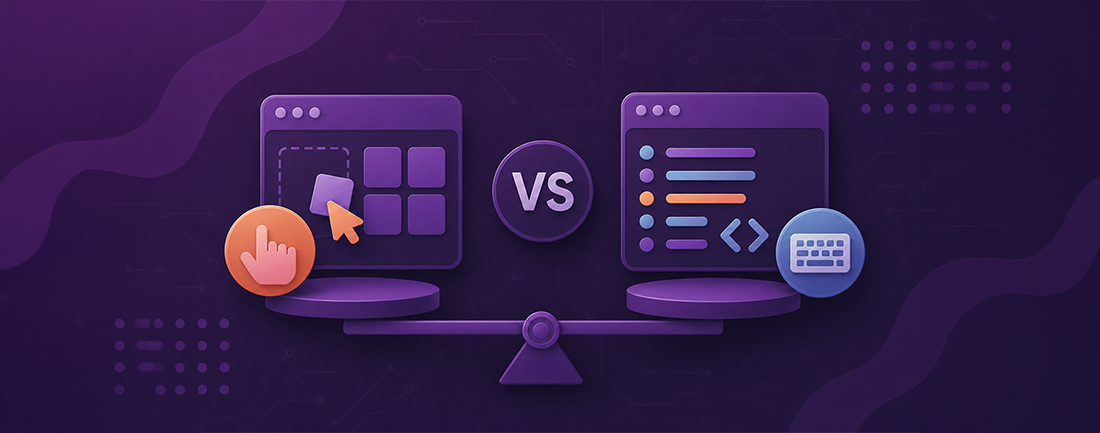
The first step on the road to test automation success is formulating a test plan. This plan often includes research and deliberation on which automation tool to use. Rather than haphazardly choosing the best tool in the market, it is best to first analyze your company's testing goals before settling on a solution.
However, you may be overwhelmed and unsure of how to go about selecting the ideal test automation tool. The foundational question is whether to employ scripted automation tools that have been around for a long time or scriptless automation technologies that are rising in popularity due to their extensive features and user-friendliness.
In this blog, we’ll compare and contrast scripted and scriptless automation testing solutions, laying out the pros and cons of each to help you choose the best one for your company's needs.
To begin, let's get a grasp on scripted and scriptless automation.
A software product, like a web application, can be tested and validated using either scripted or scriptless automated techniques to make sure it meets quality requirements in areas like code style, performance, and user experience.
Let's take a closer look at scripted automation and find out more about it.
What is scripted automation?
When it comes to test automation, the tried-and-true method is called "scripted automation," and it entails writing test scripts in a programming language like Java or Python.
The purpose of these scripts is to mimic a user's behaviour when interacting with the tested software.
Advantages of Scripted Testing
1.Ability to automate technically demanding and complex testing Multiple programming languages can be used to develop elaborate test scripts that solve intricate test cases. Therefore, scripted automation testing can be used to solve even the most technically difficult test cases.
2.Gives test engineers more leeway in terms of experimentation and customization Since test engineers are given full discretion in determining the capabilities of the test cases, they can tailor them to the specific needs of their organizations and even play around with upcoming features.
3.Maximize output from limited resources while minimizing expenses Automated test scripts enable reusing test steps and can be executed quickly and iteratively with minimal human interaction. The costs associated with hiring test engineers are mitigated when only a small number of them are needed to manage the full testing process.
Disadvantages of Scripted Testing
1.Expertise and experience in programming are required To make the most of scripted testing, test engineers need to have a solid grasp of coding. Scripted testing has this downside because it prevents manual test engineers, who typically have in-depth topic knowledge but lack coding competence, from generating test scripts.
2.Modifying scripts to reflect the latest version of an application can be a tedious maintenance task There is a continuous requirement to update the test scripts so that the application can be tested effectively while it undergoes periodic reskins. Keeping the test scripts updated with the most recent application releases is an exhausting task.
3.A single test script cannot handle several platforms A single script cannot be used for automation testing across all platforms due to incompatibilities with operating systems. As a result, a test engineer must create fresh test scripts specific to the operating system, browser, or mobile device in question.
Now, let's examine scriptless automation testing solutions in greater detail and weigh their benefits and drawbacks.
As its name implies, scriptless automation does not require test engineers to write code in order to construct and execute automated tests. To do this, a test automation tool with a graphical user interface is used.
Advantages of Scriptless Testing:
1.Integration with DevOps and Agile methodologies Scriptless automation's compatibility with DevOps and Agile frameworks enables continuous testing at all stages of the software development process. This connection allows for quicker feedback loops, which in turn aids in finding bugs at an earlier stage of production.
2.Cross-platform compatibility eliminates the need to build platform-specific test scripts Scriptless automation test scripts can run on a wide variety of platforms, browsers, OSs and devices. This means that the test scripts can be run on multiple platforms with minimal modification.
3.Time frames for testing that are cut while maintaining efficiency Scriptless automated testing allows for a greater volume of test scripts to be created every day, which speeds up the testing process. The time and effort spent bringing software to market can be reduced significantly.
Check out FireFlink, which greatly accelerates the process of writing test scripts and enables test engineers to generate at least 20-25 test cases daily.
Disadvantages of Scriptless Testing:
1.Reduces the necessity for coding, but not completely Even though scriptless automation testing eliminates the necessity for scripting, some unique test processes will still have to be manually programmed.
FireFlink Solution:
The majority of the coding burden is removed in FireFlink because the NLP-based test procedures can cover 90% of the test scenario activities and verifications.
2.Limitations in terms of test script customization While scriptless automation has the capacity to handle the vast majority of test cases, building test scripts to perform specialised features can be difficult; as a result, test engineers frequently resort to employing scripted test automation.
FireFlink Solution:
However, the FireFlink platform makes it simple for test engineers to import code for test cases with specialized functionality from other IDEs, allowing for the effortless incorporation of customized scripts.
3.There is a lot of misunderstanding about scriptless automation testing Scriptless automated testing allows for a greater volume of test scripts to be created every day, which speeds up the testing process. The time and effort spent bringing software to market can be reduced significantly.
FireFlink Solution:
FireFlink provides a free demo for anyone curious about its capabilities to answer any questions they may have about scriptless automation.
Conclusion
By automating repetitive, time-consuming operations, your business could benefit from scriptless automation. Scriptless automation removes the need for programmers, allowing non-technical users like business analysts, subject matter experts, and even end-users to create and execute automated workflows.