Cloud testing
Cloud testing has transformed the landscape of software testing by offering a highly efficient and convenient approach to assure product quality. Leveraging cloud computing services and resources allows organizations to execute testing procedures remotely. This innovation not only facilitates significant cost savings by eliminating the need for expensive infrastructure investments but also accelerates the testing timeline, enhancing the overall software development process.
Why cloud testing?
Cloud testing offers a transformative solution for businesses seeking to improve software quality efficiently and cost-effectively. It provides tailored testing options like load, security, and mobile testing, accelerates testing cycles through parallel testing, and ensures data protection with strong security measures. Additionally, its seamless integration with automation tools, rapid environment provisioning, flexible resource management, and global accessibility make it a compelling choice for organizations aiming for rapid, scalable, and efficient testing outcomes, all while significantly cutting down on infrastructure costs.
Here are some of the key benefits:
1. Customized Testing Solutions:
- Load, security, and mobile testing.
- Tailored to meet specific project requirements.
2. Accelerated Release-Cycles:
- Parallel testing across different configurations.
- Faster feedback and quicker iterations.
3. Robust Security Protocols:
- Ensures data safety and integrity.
- Meets compliance standards.
4. Integration with Automation Tools:
- Increases efficiency and scalability.
- Automates scaling of test environments.
5. Expedited Time-to-Market:
- Rapid provisioning and configuration.
- Optimizes resource use, improving speed.
6. Flexible Resource Allocation:
- Pay only for what you use, optimizing costs.
- Easily scale resources up or down.
7. Global Accessibility:
- Test from anywhere in the world.
- Facilitates collaboration among dispersed teams.
8. Cost-Effectiveness:
- Reduces the need for physical infrastructure investment.
- Lowers operational costs with cloud services.
Tools available in the market
The market is equipped with a range of cloud testing tools, each designed to meet the specific needs of software testing in a cloud environment. These tools help in automating tests, ensuring compatibility across various platforms, and improving the efficiency of testing processes.
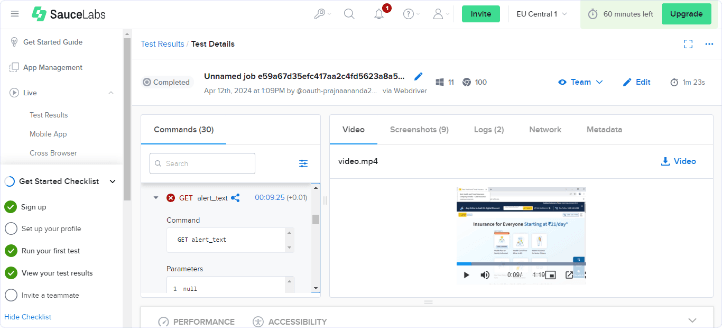
Sauce Labs
Enables automated and manual testing across multiple browsers and operating systems for web and mobile applications.
BrowserStack
Offers instant access to numerous desktop and mobile browsers for seamless web and mobile application testing.
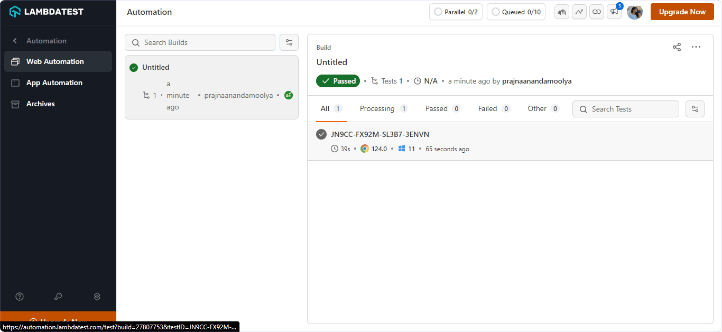
LambdaTest
Facilitates cross-browser testing for web applications on a variety of browsers and operating systems.
Industry Trends
Increased Adoption of Cloud-Native Testing
- Microservices and Serverless Architectures: Focus on ensuring the functionality and quality of cloud-native systems, including microservices and serverless architectures.
- Serverless Testing Frameworks: Growing popularity for their capability to test serverless functions and events directly in the cloud environment.
Security Testing in the Cloud
DevSecOps Integration:
- Incorporating security practices into every stage of the development and testing lifecycle to ensure continuous security.
Comprehensive Security Measures:
- Emphasis on penetration testing, vulnerability assessments, and compliance testing to secure cloud-based systems and applications.
Cost Optimization in Testing
- Right-Sizing Test Environments:
- Selecting cloud resources that match the specific needs of the testing process to avoid overspending. ####Cost-Effective Practices:
- Implementing strategies such as prioritizing key tests, reducing redundancy, and leveraging automation to minimize costs.
AI and ML in Testing
- Predictive Analytics:
- Utilizing AI and ML for planning and prioritizing tests based on predictive analytics.
- AI-assisted test generation, self-healing automation, and intelligent test prioritization are becoming increasingly common in modern cloud testing: Enhancing the speed and accuracy of testing through AI and ML-driven automation.
Shift Toward Continuous Testing
- Integration with CI/CD Pipelines: Continuous testing becomes crucial as organizations adopt CI/CD pipelines for faster and more frequent software releases.
- DevOps Principles: Continuous testing aligns with DevOps by improving collaboration and quality across development and operations teams, ensuring ongoing assessment and quality checks throughout the development process.
Pain points/Disadvantages
Lack of Offline Testing
- Isolated Settings Requirement: Inability to conduct tests in isolated or air-gapped environments due to reliance on online resources.
- Offline Testing Limitations: Challenges in testing scenarios that require no internet connectivity, impacting the versatility of testing strategies.
Compliance Challenges
- Data Residency and Privacy: Navigating the complexities of data residency laws and privacy regulations in a shared cloud environment.
- Industry and Legal Norms: Difficulty in adhering to strict industry standards and legal requirements, which can be exacerbated by the cloud's distributed nature.
Dependence on Internet Connectivity
- Stable Connection Requirement: Essential for accessing cloud-based testing environments and executing tests, which can be a significant barrier in areas with poor internet service.
- Testing Disruptions: Potential for testing interruptions due to internet instability or outages, affecting timelines and productivity.
Integration Challenges
- Workflow Compatibility: The need for additional resources to integrate cloud testing solutions with existing development and testing workflows, which can be time-consuming and complex.
- Tool and Process Alignment: Ensuring compatibility between cloud testing technologies and current tools/processes requires careful planning and adaptation.
Dependence on Third-Party Providers
- Service Reliability: Risks associated with relying on external cloud service providers, including possible service disruptions or outages.
- Provider Dependence: Limited control over the testing infrastructure and potential challenges in case of provider-side issues, such as downtime or changes in service policies.
FireFlink Benefits
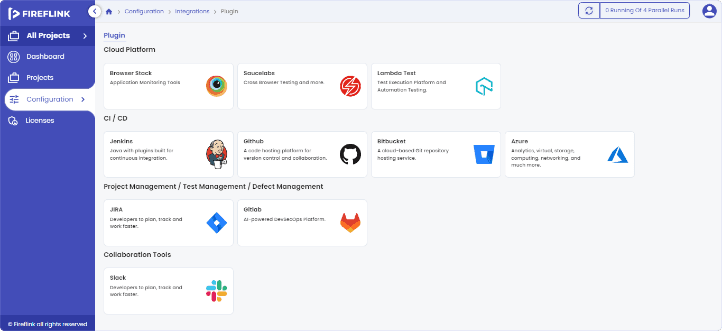
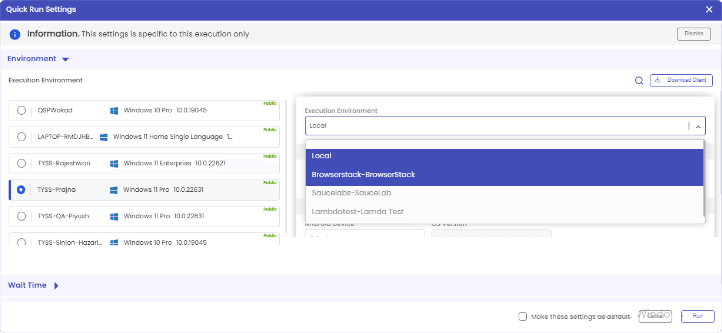
FireFlink enhances cloud testing by working seamlessly with leading platforms like Browser Stack, Sauce Labs, and Lambda Test. Here’s how it simplifies and improves the testing process:
Works Across Technologies:
Compatible with various technologies and cloud-hosted applications, making it versatile.
Integrates with Cloud Testing Platforms:
Allows for efficient testing across multiple browsers and devices simultaneously, saving time and resources.
Ensures Compatibility Testing:
By using these platforms, businesses can ensure their apps work well on all devices and browsers through comprehensive compatibility tests.
Generates Real-Time Reports:
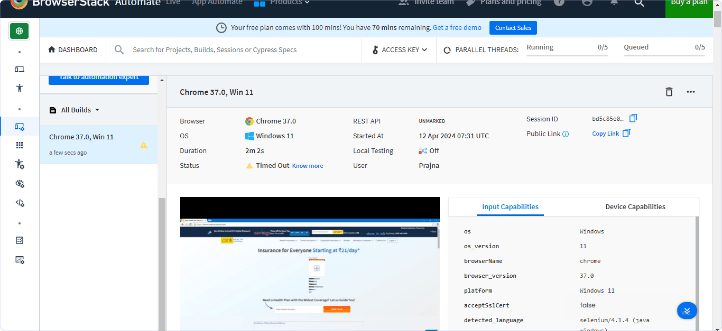
FireFlink integrates with these cloud testing platforms to execute tests and provides detailed execution reports, screenshots, and logs for easier analysis, providing insights into problems with screenshots for context, helping to quickly identify and fix issues.
1.BrowserStack:
2. Sauce Labs:
3. Lambda Test:
Executing the scripts using Browser Stack: